
19 Signs of Thyroid Problems You Shouldn't Ignore
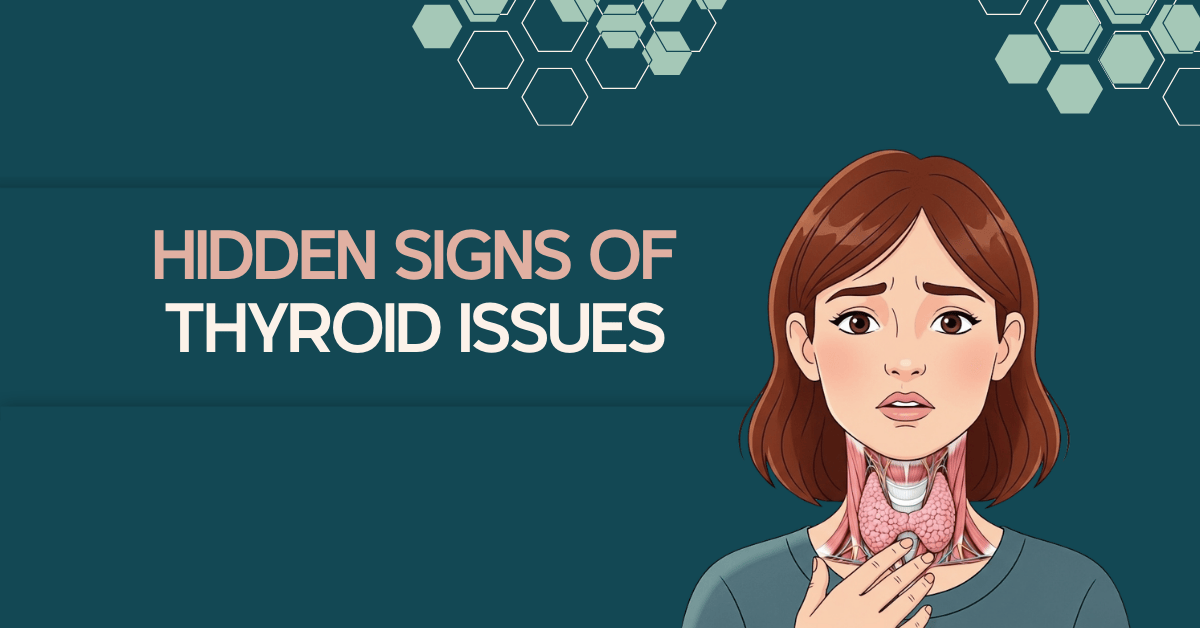
Your thyroid is a small gland in your neck that looks like a butterfly. It may be small, but it has a big job to do. It makes hormones that affect your metabolism, energy levels, body temperature, and a lot more. Your whole body can feel the effects of your thyroid not working right, either by making too much hormone (hyperthyroidism) or too little (hypothyroidism). The hard part is that thyroid problems often get worse slowly, and at first, the symptoms may seem random or unrelated. You might think you're feeling this way because you're stressed, not getting enough sleep, or just getting older, but it's really your thyroid sending out warning signs. This blog will go over 19 common signs that your thyroid may not be working well. Some symptoms point to an overactive thyroid, while others point to an underactive one. Some symptoms can happen with either condition. If you know what these signs mean, you'll know when it's time to see your doctor and have your thyroid checked.
Understanding Your Thyroid
Let's quickly go over what the thyroid does before we get into the symptoms. This gland is located at the base of your neck, just below your Adam's apple. It releases two main hormones, T3 and T4. These hormones move through your blood to almost every cell in your body, telling them how quickly or slowly to work.
Your thyroid is like the gas pedal for your body. When it works, everything goes smoothly. Hyperthyroidism means that your body makes too much hormone, which makes everything go faster. When it doesn't make enough hormone (hypothyroidism), it's like driving with the emergency brake on; everything slows down.
Millions of people have thyroid problems, and women are more likely than men to get them. The good news is that most thyroid problems can be treated well with medicine and changes to your lifestyle once they are diagnosed.
19 Signs Your Thyroid Might Be Acting Up
1. Unexpected Shifts in Weight
This is what people usually see first. If you have hypothyroidism, which means your thyroid isn't working right, you might gain weight even if you don't change what you eat or how much you work out. Your metabolism slows down, which means your body burns fewer calories. On the other hand, hand, hyperthyroidism (overactive thyroid) can cause unexpected weight loss, even if you're eating more than usual. Your body is burning through calories too quickly.
2. Constant Fatigue or Excessive Energy
A common symptom of hypothyroidism is feeling worn out regardless of how much sleep you get. You may struggle to find the energy for simple tasks throughout the day, feeling as though you are walking through mud. In contrast, hyperthyroidism can cause you to feel wired, agitated, or as though you've had too much coffee when you haven't. It is sometimes referred to as feeling "tired but wired."
3. Temperature Sensitivity
When you're sweating or freezing, does everyone else appear to be at ease? Your body's thermostat is messed up by thyroid issues. You frequently feel cold all the time when you have hypothyroidism, especially in your hands and feet. Others may be fine, but you may need additional layers. Even in cool environments, hyperthyroidism can cause excessive perspiration and an easy tendency to overheat.
4. Changes in Heart Rate
Thyroid hormones have a direct effect on your heart. If you have hypothyroidism, your heart rate may go down. You might feel like your heart is barely beating or see that your pulse is slower. Hyperthyroidism, on the other hand, causes palpitations, a pounding feeling in the chest, and an irregular or fast heartbeat. Some people even feel their heart race while they are lying still in bed.
5. Mood Swings and Mental Health Changes
Problems with your thyroid can make your emotions very unstable. Hypothyroidism is linked to depression, low mood, lack of motivation, and ongoing sadness. Hyperthyroidism often makes people feel anxious, nervous, irritable, and tense. You might get angry more easily or have panic attacks that you can't explain. These are real signs of a hormonal imbalance, not just something you think.
6. Hair Loss or Changes in Hair Texture
Have you noticed more hair in your shower drain or brush? Hair thinning or loss can result from both hypothyroidism and hyperthyroidism. Your hair may also become brittle, dry, and coarse due to hypothyroidism. The outer third of your eyebrows may become thinner. Your hair may become fragile and fine due to hyperthyroidism.
7. Dry Skin or Excessive Sweating
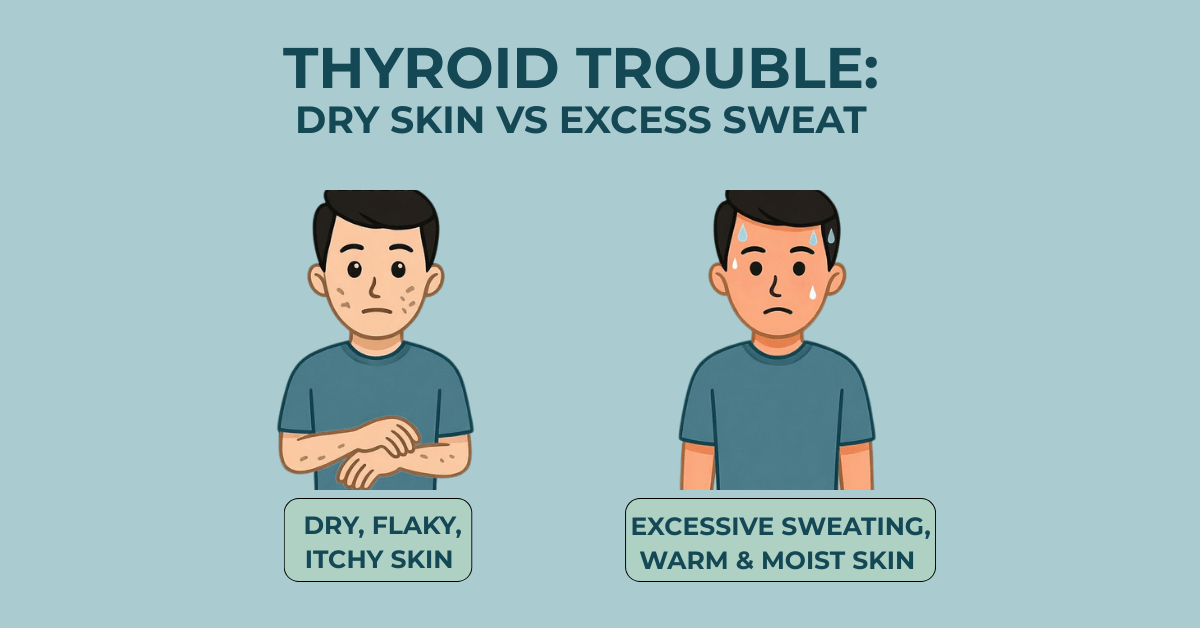
Hypothyroidism can make your skin dry, flaky, and itchy, even if you use a lot of lotion. Your skin might feel rough or look pale. Usually, hyperthyroidism makes your skin warm, moist, and smooth instead. You could sweat a lot even when you're not working out or hot.
8. Muscle Weakness or Tremors
If you have hypothyroidism, your muscles may feel weak, sore, or stiff, especially in your hips and shoulders. You might find it hard to lift things or climb stairs that used to be easy. Hyperthyroidism can also make your muscles weak, but it usually comes with tremors, which are shaky hands that make it hard to hold a cup steady or write clearly.
9. Changes in Bowel Habits
When you have hypothyroidism, your digestive system slows down, which can lead to constipation that doesn't get better with fiber or water. It can be annoying and last a long time. Hyperthyroidism speeds up digestion, which can cause diarrhea or make you need to go to the bathroom a lot. You might need to use the bathroom more often than normal.
10. Menstrual Irregularities
Problems with the thyroid often show up in women's periods. Hypothyroidism can cause periods to be heavier, last longer, or happen more often. Your cramps might also get worse. Hyperthyroidism can make menstrual cycles shorter, lighter, or less frequent. Some women may not have periods at all. Issues with the thyroid can also make it harder to get pregnant.
11. Brain Fog and Memory Problems
Do you feel mentally foggy, have trouble focusing, or forget things more often than usual? Hypothyroidism is well-known for making people feel foggy in the head. You might have trouble remembering things, focusing, or finding the right words. Things that used to be easy might suddenly seem hard. If you have hyperthyroidism, your mind might feel scattered and you might not be able to focus because your thoughts are racing.
12. Swelling in the Neck
A goiter is an enlarged thyroid gland. If you can see a lump or swelling at the base of your neck, it could be a goiter. If you have either hypothyroidism or hyperthyroidism, this can happen. You might see it in the mirror or feel it when you swallow or wear a turtleneck. It's hard to see sometimes, but other times it's very clear.
13. Hoarse Voice
If your voice sounds rough, deep, or hoarse and you don't have a cold, it could be because your thyroid is swollen or nodules are pushing on your vocal cords. People with hypothyroidism are more likely to have this symptom, but it can happen with any kind of thyroid enlargement.
14. Puffy Face and Swelling
People with hypothyroidism may hold onto extra water, which can make their faces look puffy. Your eyelids, face, hands, and feet may all look puffy when you wake up. Your body holds onto more water when your metabolism is slow.
15. High Cholesterol
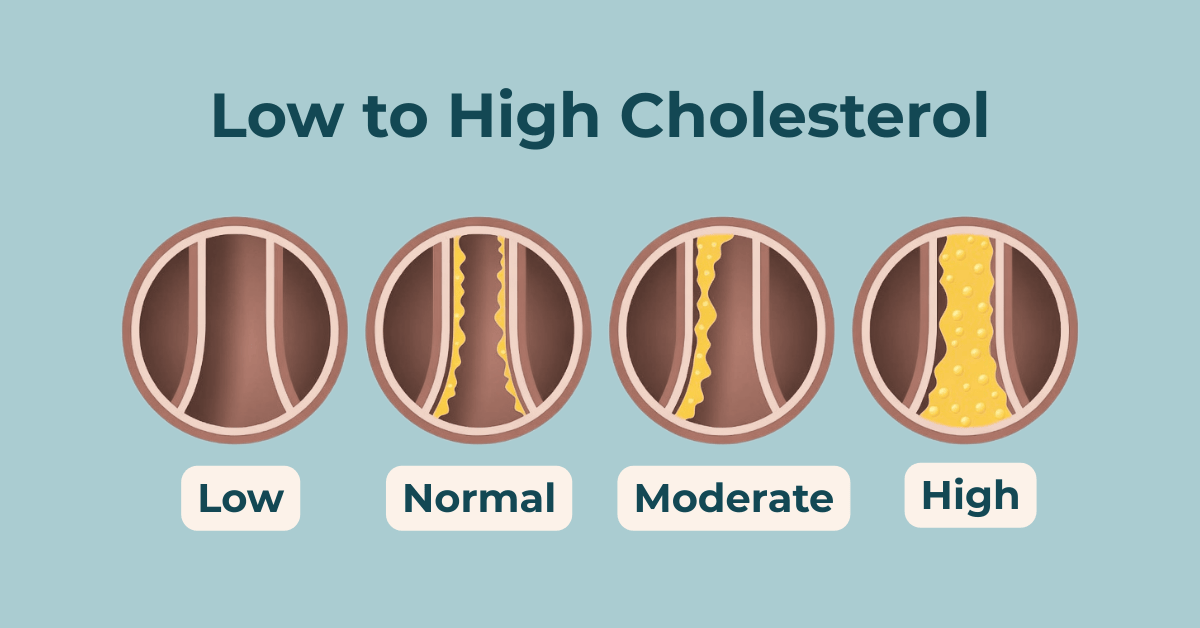
If you have hypothyroidism, your doctor might see high cholesterol levels in your blood work. When your thyroid doesn't make enough hormone, it changes how your body breaks down fats, which makes cholesterol build up. A lot of the time, high cholesterol is the first sign that someone has a thyroid problem.
16. Sleep Problems
Can't get to sleep or stay asleep? People with hyperthyroidism often have trouble sleeping and can't stay asleep. You might toss and turn because you can't turn off your mind. If you have hypothyroidism, you might sleep more than usual but still feel tired when you wake up. Some people with hypothyroidism also get sleep apnea, which makes them feel even more tired.
17. Eye Problems
Graves' disease, a type of hyperthyroidism, is a common cause of this. Your eyes might bulge out, feel dry and gritty, or get sensitive to light. You might not be able to fully close your eyelids, or your eyes might look like you're staring even when you're not. You might also see double.
18. Changes in Appetite
If you have hypothyroidism, you might not feel as hungry as usual. However, you still gain weight because your metabolism is so slow. Hyperthyroidism typically leads to heightened appetite. You might feel hungry all the time and eat more than you normally do, but you could still lose weight because you burn calories so quickly.
19. Difficulty Swallowing
You might feel like something is stuck in your throat or have trouble swallowing if your thyroid is swollen or you have nodules. This can make it hard to eat, especially when you have to swallow big pieces of food or pills. Some people say it feels like their throat is getting tight or they can't breathe.
What to Do If You Notice These Signs
Don't panic if you see a lot of these signs in yourself, but do something about it. Talk to your Provider first. A simple blood test can check your thyroid hormone levels and let you know if something is wrong. TSH (thyroid-stimulating hormone) is the most common test, but doctors may also check your T3 and T4 levels.
Remember that a lot of these symptoms can also happen because of other problems, which is why testing is so important. Don't try to figure out what's wrong with you just by looking at your symptoms. To get a full picture, your doctor may also order an ultrasound of your thyroid or other tests.
The good news is that it's easy to treat thyroid problems. A daily pill that replaces thyroid hormone helps bring your levels back to normal. There are many ways to treat hyperthyroidism, such as taking medicine, getting radioactive iodine treatment, or even having surgery. Most people with thyroid problems feel a lot better and can live normal lives with the right treatment.
The thyroid is small, but it has a big effect on your health. If you can spot the early signs of thyroid problems, it can make a big difference in how quickly you get diagnosed and start to feel better. If you've been having a lot of these symptoms, especially the combination of fatigue, weight changes, and mood problems, it's a good idea to talk to your doctor about getting your thyroid checked. You don't have to deal with these symptoms when simple tests and treatments can help you feel like yourself again.
Frequently Asked Questions
-
The easiest way is to get a blood test. Hypothyroidism, on the other hand, usually makes people gain weight, feel tired, cold, have a slow heart rate, and be depressed. People with hyperthyroidism (an overactive thyroid) often lose weight, feel anxious, hot, have a fast heart rate, and have trouble sleeping. A simple TSH blood test can tell your doctor which one you have.
-
If your thyroid problems are mild and caused by things that only happen for a short time, like pregnancy or certain medications, they may go away on their own. Most thyroid problems, on the other hand, are long-term and need ongoing care. People with hypothyroidism usually need to take medicine for the rest of their lives, but there are many ways to treat hyperthyroidism. Don't stop treatment without talking to your doctor first.
-
People of all ages can have thyroid problems, but women over 60 are the most likely to have them. But a lot of people get thyroid problems in their 20s, 30s, and 40s. Women are five to eight times more likely than men to have thyroid problems. Thyroid problems often show up for the first time during pregnancy and menopause.
-
Stress alone does not directly induce thyroid disease; however, it can activate or exacerbate thyroid issues in individuals who are already susceptible to them. Stress that is very high can weaken your immune system, which may make autoimmune thyroid diseases like Hashimoto's disease or Graves' disease worse. Stress can also make the symptoms of thyroid problems worse.
-
Yes, thyroid problems do tend to run in families. You are more likely to get thyroid disease if your parents, siblings, or other close relatives have it. Tell your doctor about your family's health history so they can keep a closer eye on your thyroid levels.
-
If you have hypothyroidism, you should limit how much raw cruciferous vegetables (like broccoli, cabbage, and kale) and soy products you eat. Eating too much of these foods can make your thyroid not work as well. If you take thyroid medicine, don't take it with calcium or iron supplements or foods high in fiber, as these can make it harder for your body to absorb the medicine. If you have hyperthyroidism, your doctor may tell you to cut back on foods that are high in iodine. Talk to your doctor before making any changes to your diet.
